Overview
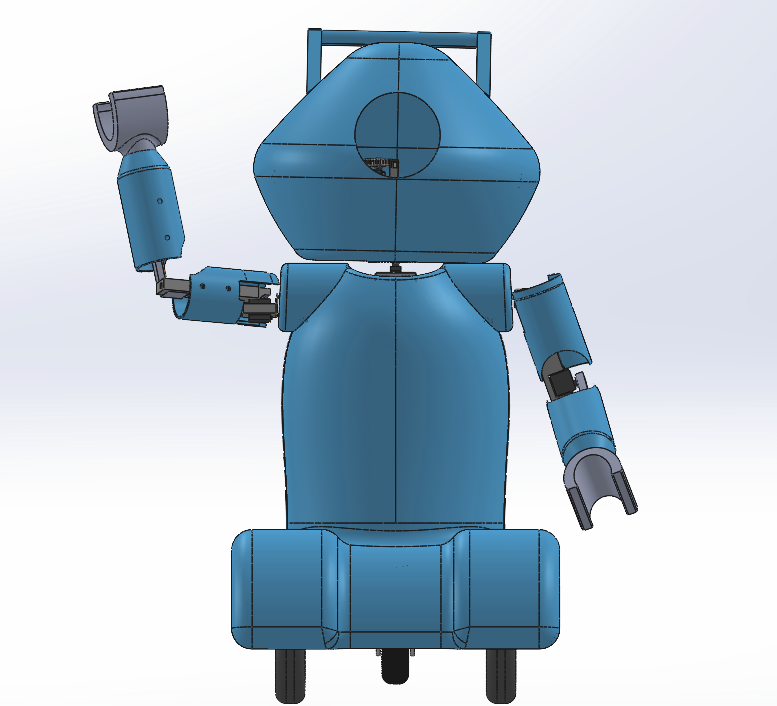
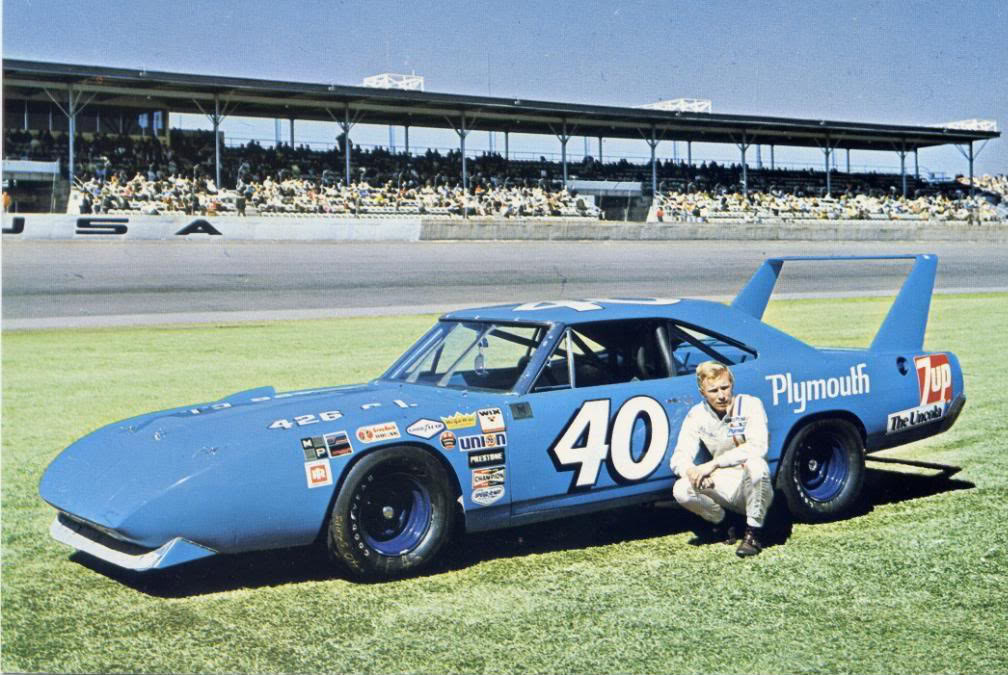
Racer Droid is a WIP eleven-function figure depicting an original robot character inspired by the car of Talladega Superspeedway Champion Pete Hamilton. I'm helping lead a team of ten to bring this project to life.
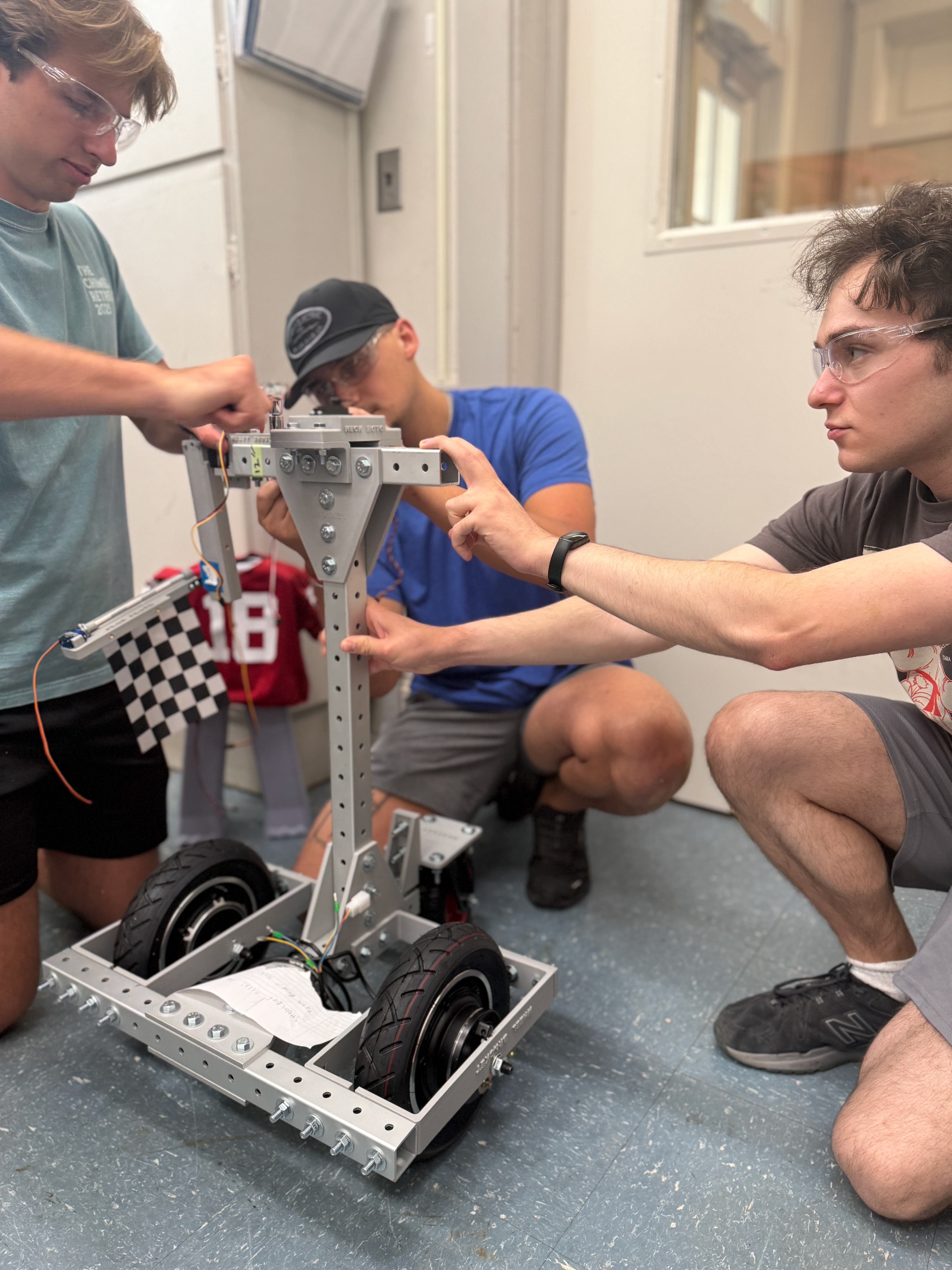
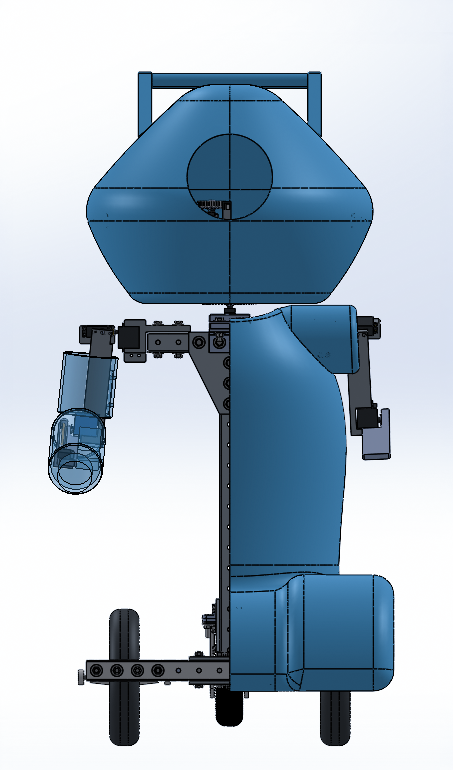
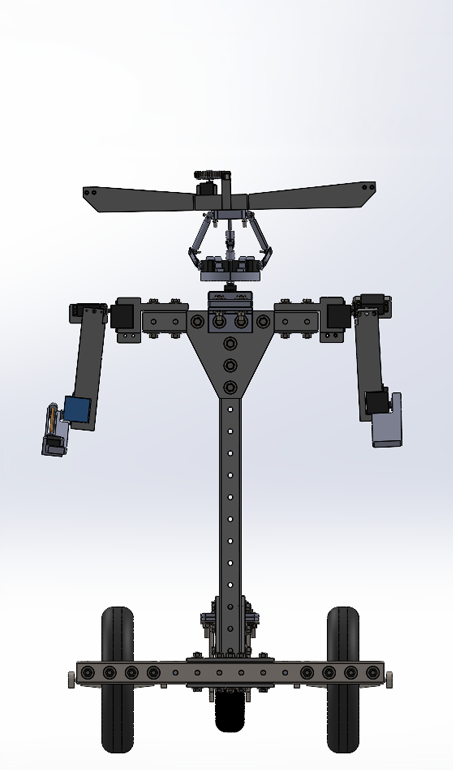
I was tasked with designing the robot chassis, including the drivetrain and structure. Working with the electrical team, we selected two electric scooter wheels to balance power, weight, and all-terrain performance. A third castor wheel was used in the rear to balance the robot. Much of my team on this project was made up of freshmen, so I taught them how to use SOLIDWORKS and delegated different functions to them to design, walking them through the engineering process as needed.
We are in the final assembly process and are finishing the outer shell prints. Once complete, this racing robot should be able to drive around campus and interact with students.
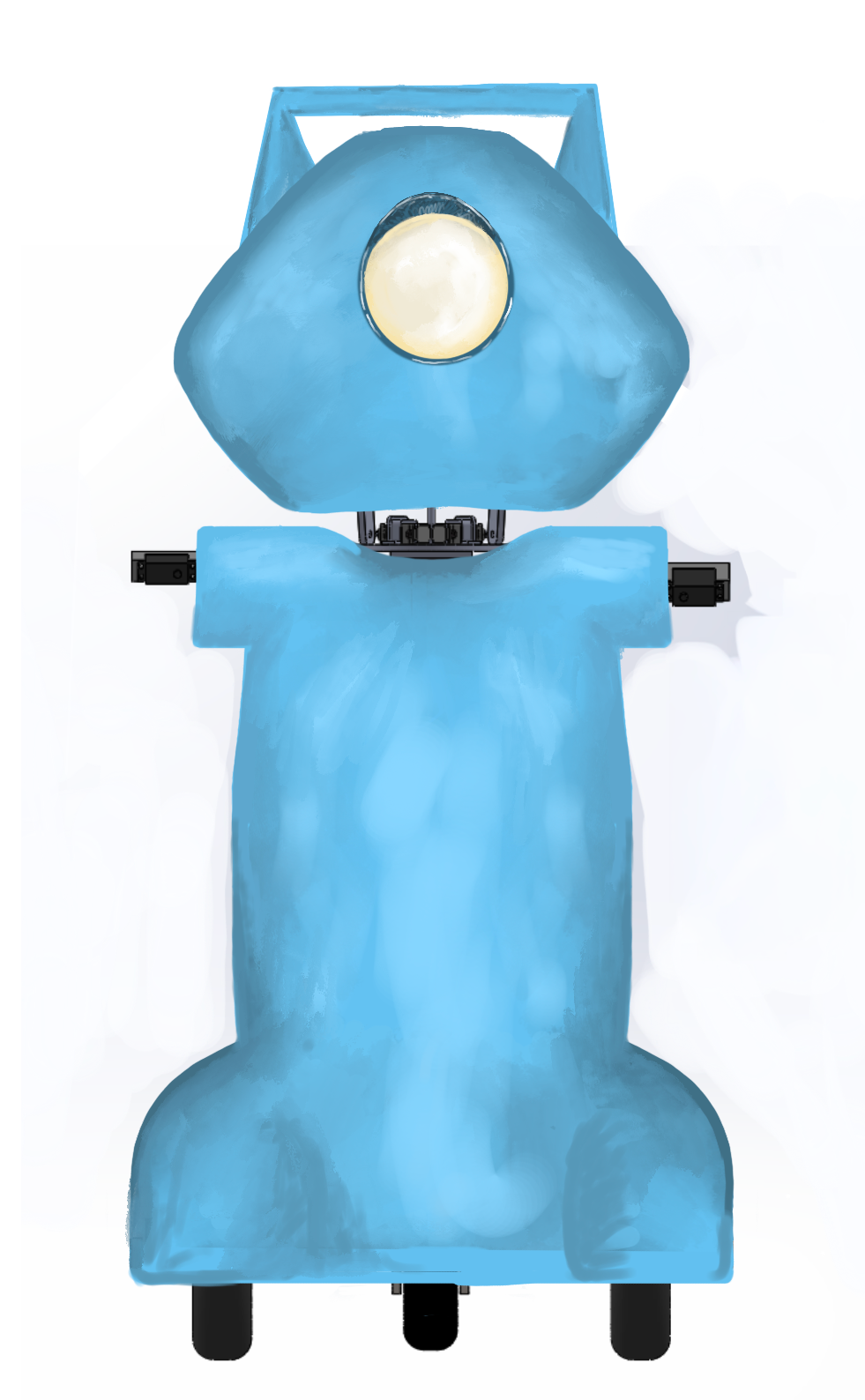
Concept Art
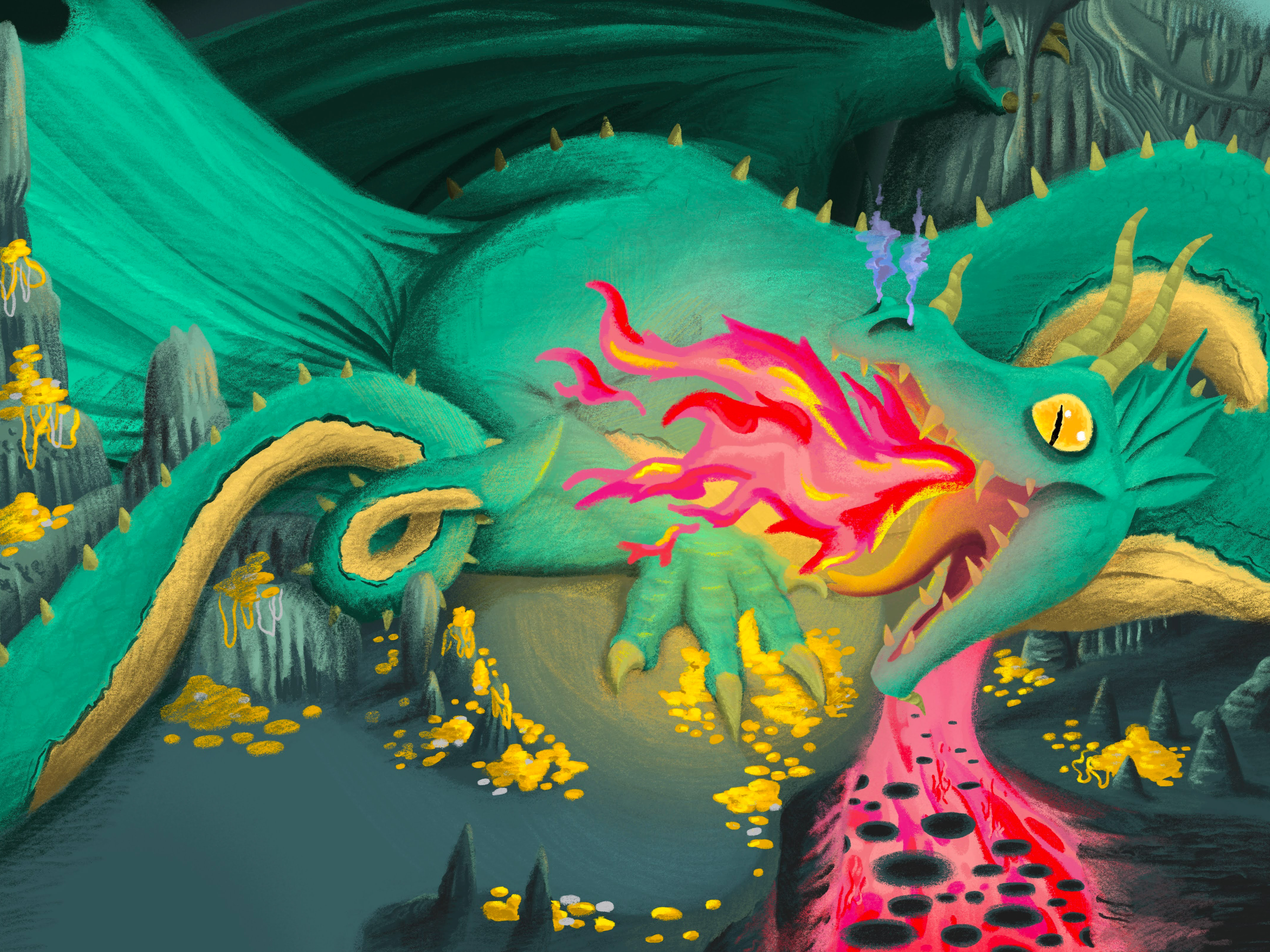
(credit to April Berry)
Concept Development
This figure is an original character connected to a sci-fi theme park land connected to the state of Alabama. It is an interactive robot based on a futuristic racing scene in Talladega. He is a race official with a retractable flag, but it aspires to be a part of the competition itself! So it goes around challenging guests to race in hopes of getting noticed.
Structure
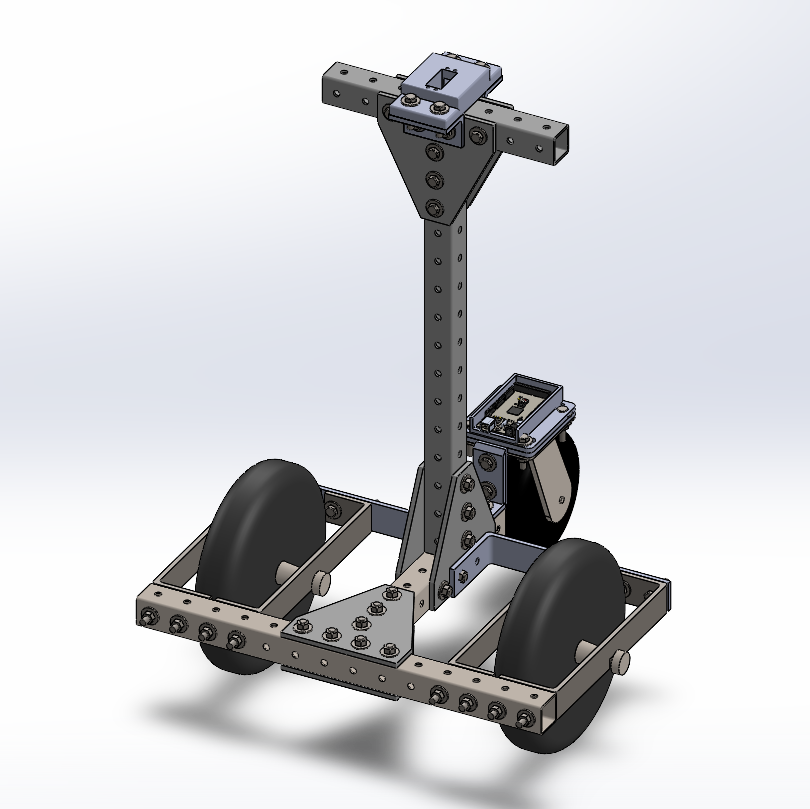
The structure is constructed of aluminum framing and PLA. The assembly is then bolted together to form a rigid skeleton. After running into manufacturer constraints, multiple parts had to be updated to plastic. I conducted stress analysis and GD&T to ensure reliability and safety.
A three wheel design is utilized to maximize stability. The rear wheel is a swiveling castor wheel. This design is highly maneuverable and can make zero-point turns. The base is lifted off the ground so it robot can traverse many forms of terrain.
Other Droid Parts
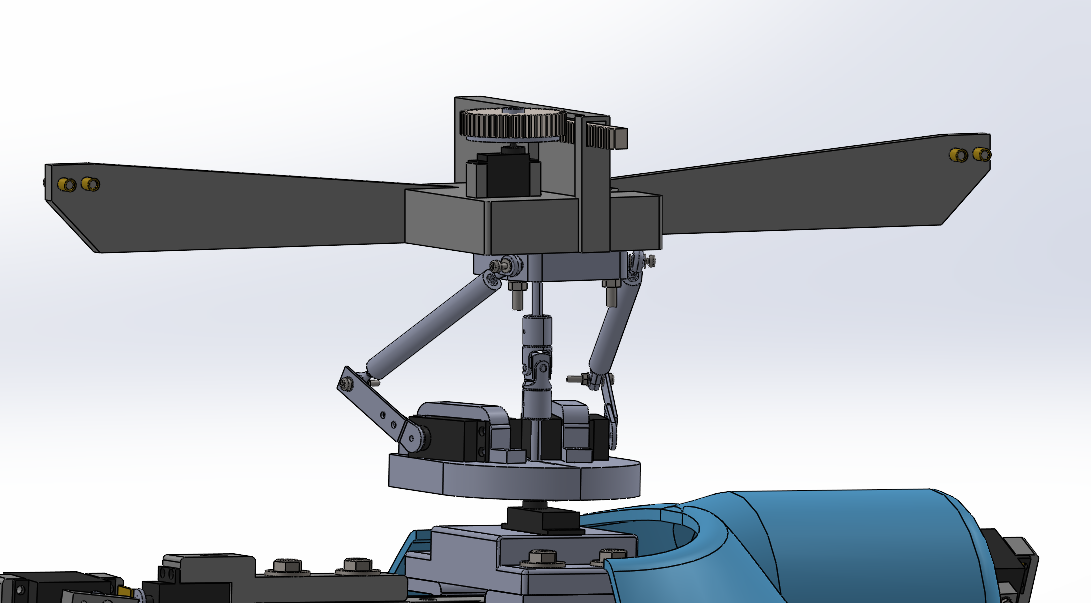
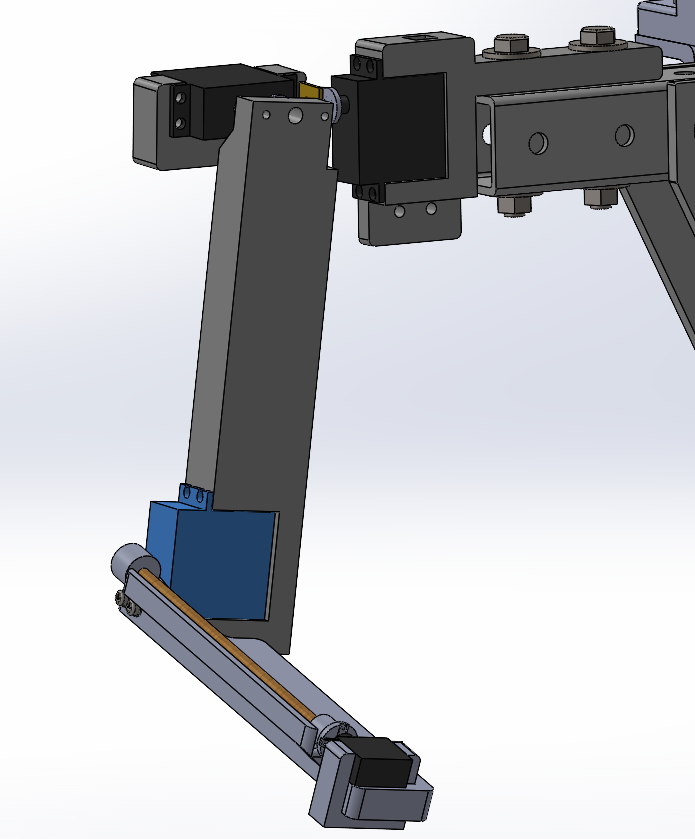
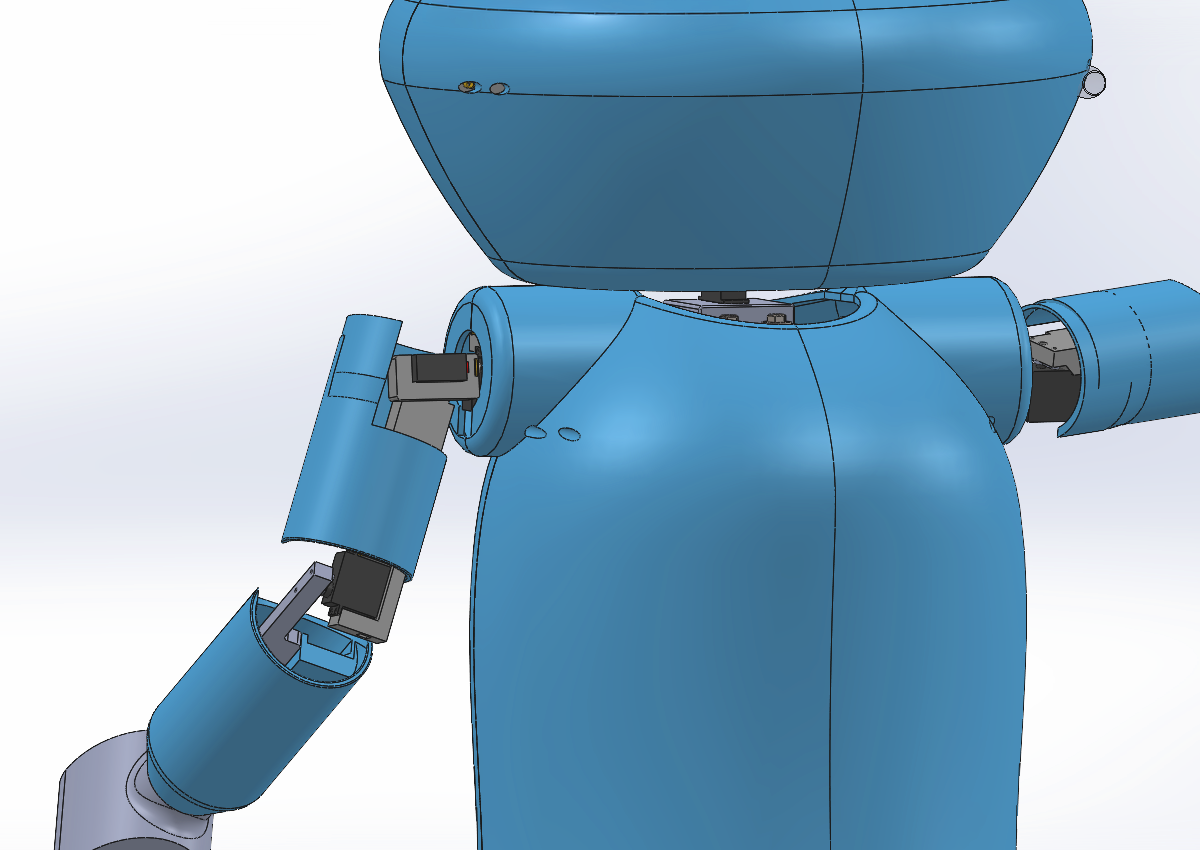
Because many members were freshmen, I advised their designs. This includes the multi-directional neck and shoulders, bicep, eye zoom, and flag mechanism. I helped refine and integrate them into manufacturable forms that worked within the greater figure.
Fabrication
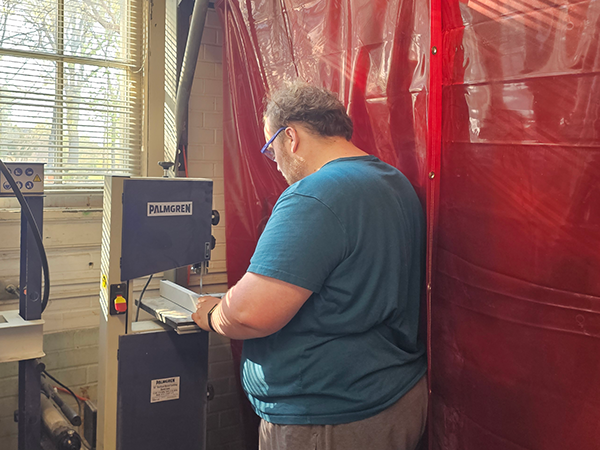
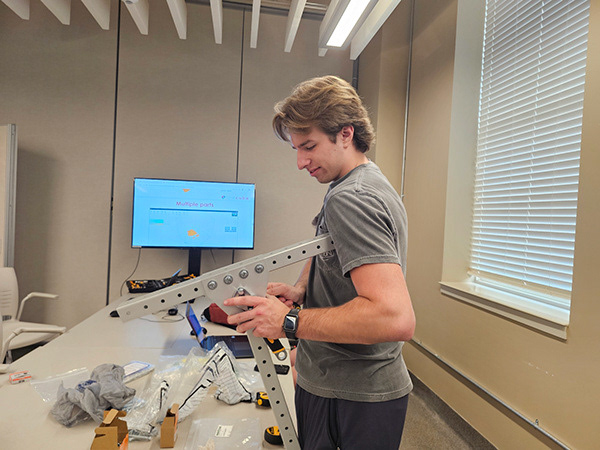
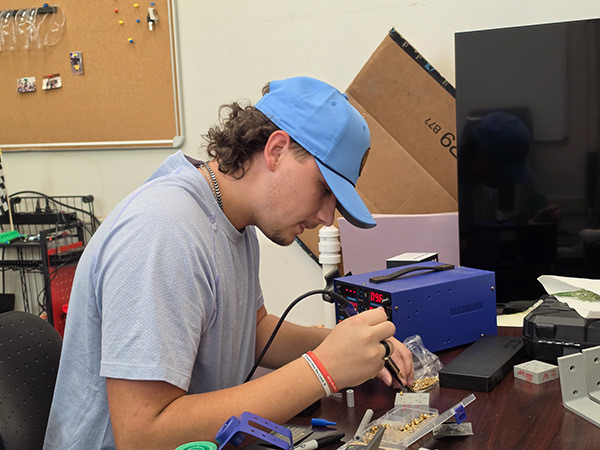
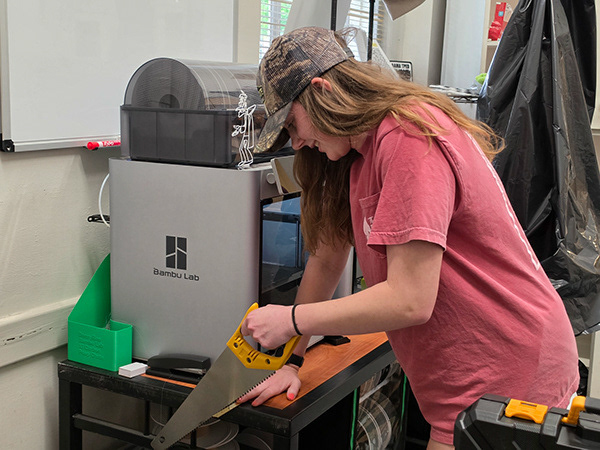
Many of the figure's parts had to be cut to shape. Team Members worked to cut his aluminum substructure to length, as well as brass strips for use as servo horns, and to heat-set threaded inserts into 3D-printed parts. Many of his 3D-printed parts, such as his shells, are too large to be printed at once; these needed to be printed in sections, which were then plastic welded together.
Current Progress
We are in the final assembly process and are finishing the outer shell prints. Once complete, this racing robot should be able to drive around campus and interact with students.